Saturday, October 3, 2015

Getting to Know Your International Contacts—Part 2


I have not heard from any of my contacts so for this blog so I am using information from the Harvard website. Reading about several different countries I have learned quite a few new things. One thing that I found interesting is this program called Saving Brains that is being develop to improve the results of children who live in poverty.  What they are doing is using several different interventions to nurture and protect the early brain development in the first 1,000 days of a child's life The great  thing about this program is working around the world to help save and protect all children.  I love the idea of this program because it is looking out for the children. In Brazil, they are forming several partnerships in order to create a science-driver early childhood program.  They are training Brazilian policy makers on how to apply developmental science to inform programs and policies.  In Canada they have a program called Alberta Family Wellness Initiative which believes in the science of child development to educate public policy.  What they are working on is researching early brain and biological development, mental health, as well as addiction.  They are also educating the policy makers, healthcare communities, and the public about the information that they find.

What all these countries are doing is very important for the welfare and education of all children. They are helping them to develop a better life for them and for their children too. Children are special and a gift from God and we need to take care of them all. The earlier we start with the education the better it is.


Saturday, September 19, 2015

Getting to Know Your International Contacts—Part 1


During this course, we have had to contact different Early Educators from different parts of the world. I have not heard from any of my contacts so for this blog, I have read UNICEF’s article about childhood poverty in Indonesia. From reading this article I learned many things. Some of the things I learned are deficiencies, such as poor nutrition, are permanent by the age of 24 months and have lifelong cognitive, physical and reproductive repercussions for children.

The United Nations Convention on the Rights of the Child promises every child the right to
a suitable living for their physical, mental, spiritual, moral and social development and the right to the highest possible standard of health. It also advocates children’s right to access information and for their views to be heard. The impact of climate change is already and will continue to affect how well those rights are fulfilled.

Without accounting for the climate change, Indonesia has almost always struggled with high levels of malnutrition among children and women of reproductive age, and it has among the highest out-migration rates in South-East Asia. Nutrition and migration describe the essence of a child’s health status and the degree of their social protection. They are determinants of a child’s survival, of their physical, cognitive and social development and of the foundations for realizing.

For Indonesia, poor maternal and child care and feeding practices are the main cause of undernutrition in children and women. Recent data have shown declining rates of exclusive breastfeeding (from 40 to 32 per cent between2003 and 2007), poor complementary feeding (only 41 per cent of children aged 6–23 months are fed as per the World Health Organization

recommendations) and caring practices as well as poor maternal nutrition (BPS, 2008). There is also little access to health services, safe water and sanitation. This is compounded by high absolute poverty levels.


Sunday, September 6, 2015

Establishing Professional Contacts

This is the website that I chose for this assignment it is a community of many organizations in other
countries that are for the education of young children. One of those that I e-mailed to ask to communicate with me about their education for the young. I have always had an interest in the Netherlands.
The second one I chose was from Croatia not sure why just sounded great.


Croatia
Open Academy "Step by Step", "Korak po Korak"
Nives Milinovic
Email: nives@korakpokorak.hr

Expanded Resources

Pre[K]Now: A Campaign of the Pew Center on the States
http://www.pewstates.org/projects/pre-k-now28067
(Newsletter: http://www.pewtrusts.org/news_room_alerts.aspx )


Saturday, August 8, 2015

My Support


When it comes to support I have my family and co-workers. My strongest supporter was my husband until he passed away four years ago. He was the one who encourage me to take the step into getting my BA. I guess you could say he still supports me because I thought if he believed in me then I can go all the way and get my Masters. I also have my son and his wife encouraging me to do my best and telling me I will succeed. My co-workers are there showing me how to do things in the classroom and will help me to figure out things on my own and with them I am learning and they are learning from me. We work has a team and this helps me to be a team player and it helps me to never give up on a dream.

My one challenge is that for the first time I am going to be in charge of the class for one week. I am going to make lessons plans and set up groups, this is something I watched the teacher do and he thought it would be helpful to me to understand what it is like to teach a Special Ed class. I am nervous but I know that they will support and help me to feel comfortable. It is great that I know the children because I worked with them last year.

If I did not have the support of all these wonderful people I would not be where I am today. We all need a little help and support sometime in our life. I also have my faith which helps me each and every day.


Saturday, July 25, 2015

My Connections to Play


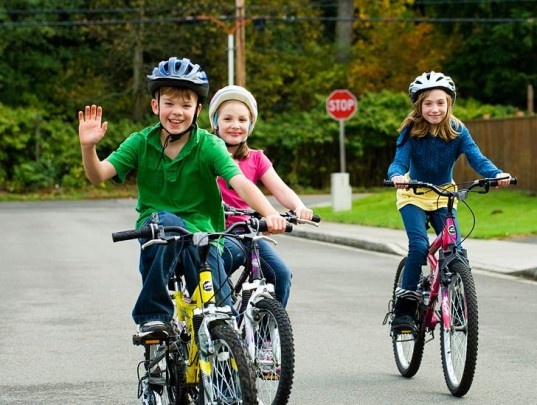
When I was younger I would spend most of my time outside playing with my sisters and friends.  We would ride bikes, go to the park, or just hang out.  My parents felt that we needed to have outdoor time to be able to burn off energy and just have time to explore.  We really love to play out in the rain and use to jump in puddles and of course play in the mud. What do you make in the mud pies of course and then we would throw them at one another.  Then jump in the puddles to wash off the mud. The one thing we always played when the weather was really bad was play school.


The way play is today is that children do not have much time outside has we did has children. With all the Technology children are more adapt to be inside to play video or computer games. I also think most parents are scared to have their children outside if they cannot be with them because of all the dangers. My daughter-in-law rarely lets my grandchildren outside because she is too busy so when they are at my house I take them outside to play has much has I can.  We go swimming, waterpark or just play in the yard.


Children need play to learn to grow and to use their imagination and just have fun and fresh air.  They need more outside then just what they get at school.


Saturday, July 11, 2015

Relationship Reflection


       Relationships are important because starting from a young age you build relationships and keep on developing them has you get older. Having a healthy relationship gives you a reason to be happy and to help during stressful times.  When my husband died my mother-in- law was there for me from making the arrangements to listening to me when I needed someone to talk to.

  Some people that I have a special relationship with are my mother-in-law, my son, and my grandsons. My strongest relationship was with my husband he was my best friend and was always there for me. Another person that I had a wonderful relationship with was my friend of 20 years we went through a lot together but we had each other’s back and I am her son’s godmother.
     I believe that the way these experiences have helped me in the early childhood field is that I have learned patience, listening, and to be non-judgmental. There is many different ways to learning and getting to know how each child learns and let them know how special they are. It will also teach you to form a relationship with the parents and other teachers.     


Saturday, June 13, 2015

Testing


     There are many test’s out there to be able to figure out where a child is at in their skill set. There is the aptitude test is a way to figure out where a child’s IQ is at. The achievement test that can tell what a child can and cannot do which is normally done in the third grade and up. One of the most important is the national assessment of educational process that test the reading, math, and other skills in the educational world. When a child has a special needs are tested through a star test and Stanford-Binet IQ set is done


     I believe making in sure we fully know where a child is at in what they know before we continue in teaching a child is the most important thing in the educational world. My reason for saying that is you will not teach a 2 year old stuff that a 9 year old would know and do. It is always important to not stressing out the child more than they need to be because they will not be willing to learn anything you want to teach them. 


     In China, children do not start till age 7. They are tested by the requirements of the Republic of China Compulsory law of 1986. This means a child has 9 years of schooling. In turn, it is a 9 year schooling process in which 6 years children work on math, physical, music, art, nature, moral and society, and practical work. The remaining 3 years children are tested and do college exams to figure out what jobs they would be able to do.


Reference:


     Berger, K.S. (2012). The developing person through childhood (6th Ed.) New York, NY: Worth Publisher

     http://sitemaker.umich.edu/vanschaack.356/synopsis_of_public_schools_in_china